 By
 Edited by
Choosing a wine refrigerator is about more than the number of bottles it holds. You also need to think about how much electricity it uses, how steady the temperature stays in your room, and whether the unit fits the space you have. This guide compares five compact and mid-sized models, with a focus on the energy details each listing provides. Where a listing is vague about efficiency, we say so, so you can judge the claims for yourself.
Quick Comparison
| Product | Capacity | Cooling Type | Temperature Range | Installation |
|---|---|---|---|---|
| Wine Enthusiast 12-Bottle Slimline | 12 bottles (8 laid, 4 upright) | Solid-state | 46°F to 64°F | Freestanding |
| Wine Enthusiast 20-Bottle Compressor | 20 Bordeaux-size bottles (1.8 cu. ft.) | Compressor | 41°F to 64°F | Freestanding |
| Nutrichef 12-Bottle Stainless Steel Slim | 12 standard bottles | Not specified in listing | 41°F to 64°F | Freestanding |
| Upstreman 12-Bottle Thermoelectric | 12 bottles (1.2 cu. ft.) | Thermoelectric | 41°F to 66°F | Freestanding |
| Yeego 24-Inch 52-Bottle Wine Cooler | 52 bottles (listed) | Compressor | 40°F to 65°F | Built-in, under-counter, or freestanding |
Our Picks: Best energy-efficient wine refrigerators reviews
Wine Enthusiast 12-Bottle Slimline for Narrow Spaces

This slimline cooler is designed for spaces where a standard wine fridge would not fit. Its narrow body holds eight bottles laid flat and four upright, so you can store both everyday bottles and open ones. The listing describes its solid-state cooling as 65% more efficient than earlier models based on daily kilowatt usage, and says it meets current U.S. Department of Energy efficiency guidelines. Of the five models here, this is the most specific efficiency claim.
The front LED touchscreen lets you set the interior anywhere from 46°F to 64°F. The insulated solid glass door is meant to block UV light and ambient heat. Many owners appreciate that the wavy chrome shelves and racks are removable, which makes it easier to rearrange the bottle layout as your collection changes.
The trade-off is capacity. Twelve bottles suit a kitchen, apartment, or small home bar, but they will not hold a large collection. Compared with the compressor models below, this unit works best in a room that stays cool, since its temperature range starts at a higher point.
Pros
- Narrow body fits tight gaps and corners.
- Listing provides a specific efficiency figure and references DOE guidelines.
- Upright rack keeps open bottles secure.
- Removable racks allow flexible bottle layouts.
Cons
- Holds only 12 bottles, less than the 20-bottle compressor model.
- The 46°F minimum is warmer than some reds need for long-term storage.
Verdict: Choose this slimline if you have a narrow space, need to store about a dozen bottles, and want the clearest efficiency details in this group.
Wine Enthusiast 20-Bottle Compressor for Larger Collections
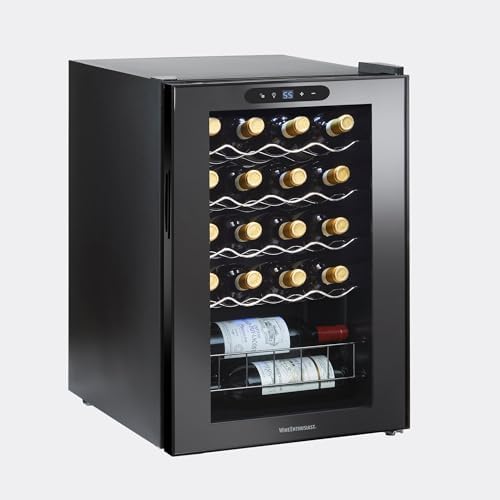
This freestanding unit offers 1.8 cubic feet of space and is listed as holding up to 20 standard Bordeaux bottles. It measures 25.13 inches high, 17 inches wide, and 17.75 inches deep, so it fits a kitchen corner or home bar more easily than a full-size cabinet. Its compressor system holds temperatures between 41°F and 64°F, which covers both whites and reds. The touchscreen panel makes adjustments simple.
Removable wire shelves accommodate bottles of different shapes and sizes. The white LED lighting lets you see your collection without opening the door for long. The warranty is also a strength, with one year of parts and labor and three years on the sealed system.
Compressor models generally hold a steady temperature better in warm rooms than thermoelectric units, but they tend to draw more power. The listing does not give an energy rating or annual consumption figure, so if efficiency is your top concern, check the specifications before you buy. Compared with the 12-bottle slimline, this model gives you more storage in only slightly more depth.
Pros
- Holds up to 20 standard bottles in a freestanding design.
- Compressor cooling keeps a stable temperature in warmer rooms.
- Removable wire shelves fit mixed bottle sizes.
- Longer sealed-system warranty adds confidence over time.
Cons
- The listing does not state an energy rating or annual power use.
Verdict: Pick this model if you want more storage than a slimline offers and a dependable compressor system, and you are willing to verify the power use yourself.
Nutrichef 12-Bottle Stainless Steel Slim for Simple Operation

This freestanding slim fridge holds 12 standard bottles and is designed to sit on a floor, table, or countertop. It is built for basic, everyday use. The digital display and soft touch controls set the temperature between 41°F and 64°F, and you can switch between Celsius and Fahrenheit. A child safety auto-lock is included, which is useful if you have young children at home.
Chrome racks and a taller bottom shelf keep bottles in place. The listing describes the unit as ultra-quiet, which suits a living room or office. A one-year quality warranty is provided. The integrated handle gives the front a smooth look.
The biggest question here is efficiency. The listing mentions efficient cooling technology but gives no energy rating, power draw, or certification, so you cannot confirm how it compares with the other models. At the time of writing, the listing also showed as unavailable, so check stock before you plan around it.
Pros
- Simple touch controls with a clear digital display.
- Child safety auto-lock adds protection in busy homes.
- Switchable Celsius and Fahrenheit units.
- Stylish stainless look with a freestanding design.
Cons
- No energy rating or power use is listed, making efficiency hard to confirm.
- The listing showed as unavailable when checked, which may limit purchase options.
Verdict: This is a reasonable choice for a simple 12-bottle setup if you value easy controls, but you should confirm its energy use and stock status before buying.
Upstreman 12-Bottle Thermoelectric for Quiet Rooms

This unit uses a thermoelectric cooling system rather than a compressor, which is the main reason it is listed as quiet and low in vibration. The listing gives a noise level under 38 dB and says it works well in living rooms, bedrooms, and offices. It holds 12 standard bottles across five curved, removable metal racks, and its 20.5-inch depth and 10.8-inch width make it a slim option for corners and narrow gaps.
The double-layer glass door is designed to block light and keep cool air inside. The digital touch panel adjusts the temperature from 41°F to 66°F and lets you switch between Fahrenheit and Celsius. The blue LED lighting is softer than fluorescent bulbs. Leveling feet help the unit sit evenly, and the listing asks for two inches of clearance on each side and four inches at the back.
Thermoelectric units generally use less power than compressor models, but they cool less powerfully, and they tend to perform best in a room that stays cool. In a warm kitchen, you may find the unit working harder to hold its set point. For that reason, it suits a climate-controlled room better than a hot garage.
Pros
- No compressor means very low noise and vibration.
- Slim footprint suits corners and narrow spaces.
- Adjustable racks fit different bottle sizes.
- Flat back and recessed handle help it sit close to walls.
Cons
- Thermoelectric cooling may struggle to hold temperature in warm rooms.
Verdict: Buy this unit if quiet operation matters most, you have a cool indoor space, and 12 bottles is enough for your collection.
Yeego 24-Inch 52-Bottle Wine Cooler for Larger Setups

This 24-inch cooler is the largest model in this group and is listed as holding 52 bottles. It can be installed as a built-in, under-counter, or freestanding unit, which gives you more flexibility than the smaller freestanding models. Its compressor and 360-degree air circulation are designed to cool evenly, and the built-in temperature control holds between 40°F and 65°F with 1°F accuracy.
Five removable wooden shelves make it easy to organize a larger collection. The double-layer tempered glass is listed as blocking more than 95% of UV rays, and an activated carbon filter helps control odors. The stainless steel frame is designed to resist fingerprints. Front-facing vents improve airflow, and a one-year maintenance service is included.
Its size is the main consideration. If you are short on space, a 24-inch unit may be too large. The listing also asks you to let the cooler stand upright for 24 to 36 hours before plugging it in, which is a step many people overlook. Compared with the smaller models, this one is a better fit for a dedicated space in a home bar or kitchen.
Pros
- Large capacity with flexible installation options.
- Removable wooden shelves suit an extensive collection.
- Compressor cooling with precise temperature control.
- Carbon filter and UV-blocking glass add protection.
Cons
- The 24-inch width requires significantly more space than the smaller models.
- The required upright rest period delays first use.
Verdict: This is the right choice if you have a dedicated space and a bigger collection to store, and you do not mind that it uses more room and power than the smaller units.
How to Choose an Energy-Efficient Wine Refrigerator
Understand the Cooling Technology
The cooling system has the biggest effect on both energy use and performance. Thermoelectric units, like the Upstreman model above, have no compressor, so they are quiet and generally use less power. The trade-off is that they struggle to cool well when the room is warm. Compressor units, such as the Wine Enthusiast 20-bottle and the Yeego, hold temperatures more reliably in warmer spaces, but they usually draw more electricity. Think about the room where the unit will live before you decide which system to pick.
Check the Efficiency Details in the Listing
Not every listing gives you the same information. The Wine Enthusiast slimline states a specific efficiency improvement and references U.S. Department of Energy guidelines, which gives you something concrete to compare. Other listings describe efficient or quiet operation without a rating or power figure. When efficiency matters to you, look for an energy rating, an annual kilowatt-hour estimate, or a clear statement of compliance with current standards. If those details are missing, you can contact the seller or check the product manual before you buy.
Match the Capacity to Your Collection
Bottle counts are useful, but they are not the full picture. A listing that says 12 bottles usually refers to standard Bordeaux-size bottles, and larger bottles or sparkling wines take up more room. Consider how many bottles you own now and how many you expect to add. A smaller unit uses less energy and space, but a larger one may give you more flexibility. Choosing a size that is close to your actual needs usually makes the most efficient use of electricity.
Plan the Space and Ventilation
Where you place the cooler affects how hard it works. Most freestanding units need airflow around the cabinet to release heat. The Upstreman listing, for example, asks for two inches of clearance on each side and four inches at the back. Blocking the vents can push the unit to run longer and use more power. Measure the opening before you buy, and leave enough space for air to move. Keep the cooler away from direct sunlight, ovens, and dishwashers.
Pay Attention to Temperature Range and Controls
Most wine refrigerators hold temperatures between about 40°F and 65°F, but the exact range varies. The Upstreman and Wine Enthusiast slimline both start at a warmer point than some other models. If you plan to store reds for long periods, a model with a lower minimum and precise digital controls gives you more options. Simple touchscreens are easy to use, but look for a unit that displays the set temperature clearly so you can confirm it is working as expected.
Consider Noise, Warranty, and Long-Term Support
Noise matters most when the cooler sits in a living area or bedroom. Thermoelectric models are generally quieter, while compressor units produce a low hum when running. Warranty coverage also affects the long-term value of your purchase. The Wine Enthusiast 20-bottle offers a longer sealed-system warranty, and the Yeego includes a one-year maintenance service. Read the warranty terms carefully before you buy, since coverage can differ between models and sellers.
Frequently Asked Questions
Are thermoelectric wine coolers more energy efficient than compressor models?
In general, thermoelectric coolers use less power than compressor units, which is why they are often marketed as energy efficient. However, they cool less powerfully and work best in cool rooms. A compressor model may use more electricity but can hold a steadier temperature in a warm space. Your room temperature and storage needs should guide the choice.
How can I tell how much electricity a wine refrigerator uses?
Look for an energy rating, an annual kilowatt-hour estimate, or a statement of compliance with current efficiency guidelines on the product page or in the manual. Some listings, including the Wine Enthusiast slimline, mention efficiency claims directly. If a listing does not include any of these details, contact the seller before you buy.
Can a wine refrigerator go in a garage or outdoors?
Most models in this guide are designed for indoor use in a room with a moderate temperature. Garages and outdoor spaces can get too hot or too cold, which makes it harder for the unit to hold its set temperature. Check the manufacturer’s guidance on ambient temperature before placing any unit in an unheated or unconditioned area.
Should I let the wine cooler sit before plugging it in?
Yes, if the manufacturer recommends it. The Yeego listing asks you to let the cooler stand upright for 24 to 36 hours before plugging it in. This gives refrigerant or internal components time to settle, which can help the unit run properly from the start. Always follow the instructions in your product manual.
What temperature should I set for red and white wine?
Many people store red wine a little warmer than white, and both are usually kept well below room temperature. The range offered by most of these units, roughly 40°F to 65°F, covers both types. A unit with a precise digital control lets you set one temperature for your whole collection or adjust it when you switch between styles.
Do I need clearance around a wine refrigerator?
Most freestanding units need some space around them for airflow. The Upstreman listing recommends two inches on each side and four inches at the back. Check the specifications for each model, since the required clearance can vary. Good airflow helps the unit cool efficiently and keeps its motor from working harder than it needs to.
Final Recommendation
For most people with a small kitchen or apartment, the Wine Enthusiast 12-Bottle Slimline is a strong first choice because it gives the clearest efficiency details and fits narrow spaces well. If you need more storage and a dependable compressor, the Wine Enthusiast 20-Bottle Compressor is the better option, provided you confirm its power use. The Upstreman thermoelectric model is ideal for quiet rooms that stay cool, while the Yeego suits larger collections and dedicated spaces. Match the cooling system to your room, check the efficiency details in each listing, and choose the capacity that fits how you actually store and serve your wine.